
Israel-Lebanon Talks Offer a Way Forward – Reoccupation Would Repeat Past Failures
April 14, 2026—New Jewish Narrative welcomes today’s talks between Israel and Lebanon as a necessary and long-overdue step toward de-escalation and regional stability. For too long, civilians on both sides have lived under the threat of violence, displacement, and loss.
Things have gotten dramatically worse since the start of the Iran War. We’ve seen extensive Israeli military activity across Lebanon, which has left more than 2,000 people dead in the past two months. We’ve also had two Israelis killed by Hezbollah rockets. Now Israeli leaders are talking openly about creating a dangerous new status quo that risks making things worse. On Sunday, Israeli Prime Minister Benjamin Netanyahu crossed the border into Lebanon with Israeli military forces, where he spoke about the need for Israel to occupy Lebanese territory. He was joined by Defense Minister Yisrael Katz who spoke about demolishing Lebanese homes "in line with the model we applied in Gaza's Rafah and Beit Hanoun."
And while Lebanese forces have not fully carried out their obligations to remove Hezbollah forces from the border area, the current Lebanese government has nevertheless taken concrete steps that indicate a genuine interest in reducing tensions. Their participation in these talks – the first direct Israeli-Lebanese negotiations in more than 40 years – speaks to their willingness to overcome domestic political taboos in the service of peace.
The prospect of a renewed, open-ended occupation of southern Lebanon is not only morally unacceptable, it is a strategic dead end: Israel’s previous occupation of southern Lebanon came at an enormous cost and helped to fuel the rise of Hezbollah as a political and military force.
To avoid repeating those mistakes, all parties must approach these negotiations with seriousness, restraint, and a commitment to fulfilling the agreements they reach. The international community – first and foremost the United States – must use its leverage to ensure that both sides agree to a viable path forward and adhere to it, even when doing so carries domestic political costs. The ceasefire agreed to just 18 months ago collapsed because of a lack of accountability: thousands of violations occurred, with no meaningful consequence imposed by the international community. This time must be different.
Hadar Susskind, President and CEO of New Jewish Narrative, said:
“I served in southern Lebanon in the mid-1990s as an IDF soldier. It was painfully clear then that we were carrying out a policy that could not deliver security. It harmed civilians, it harmed soldiers, and it strengthened the very forces it was meant to weaken. It was clear then and is even clearer now, occupation isn’t a strategy, it is a dead end. Today’s talks are the first real chance in decades to break that cycle. We cannot afford to squander them.”
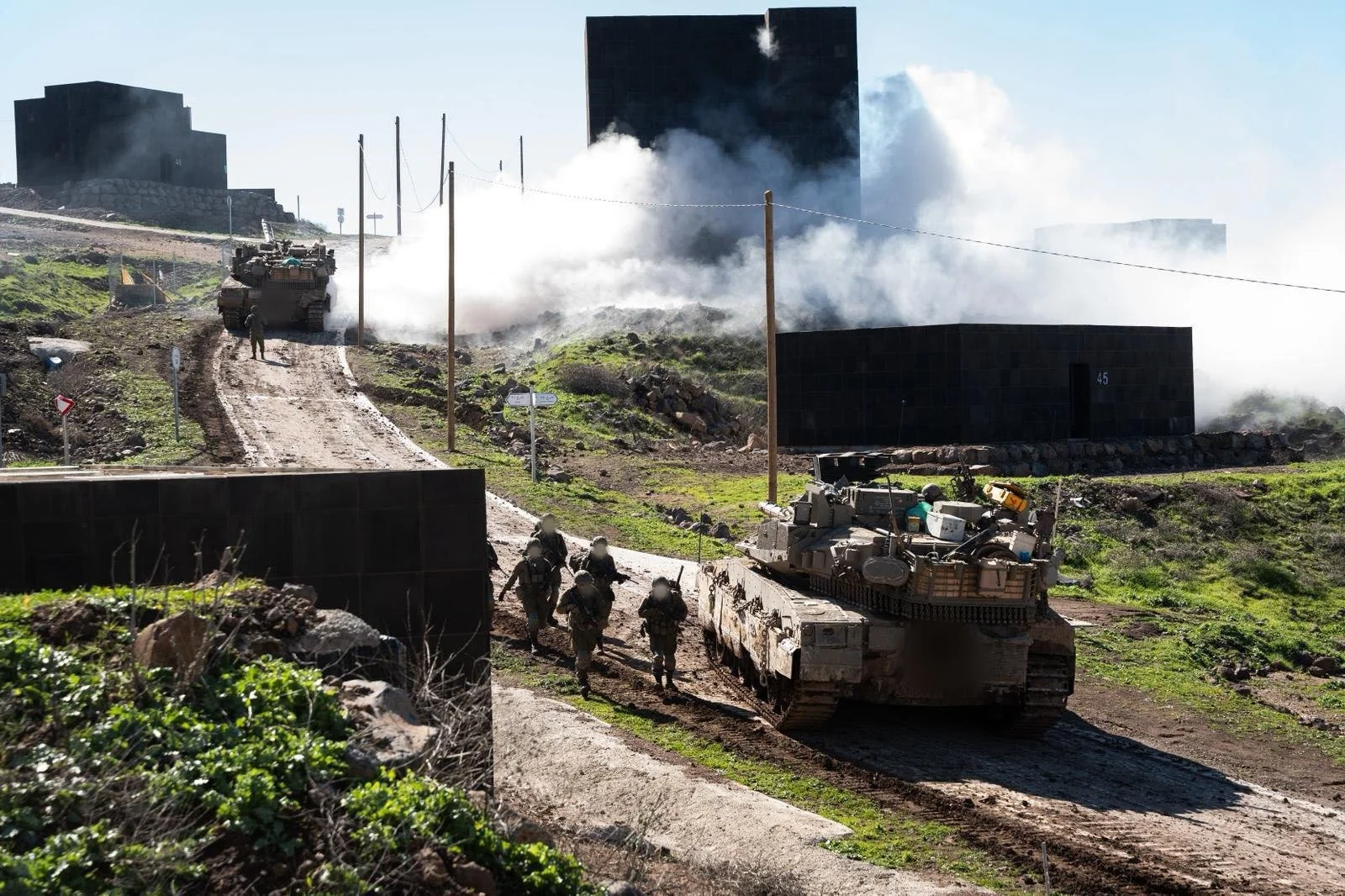
Photo by IDF Spokesperson's Unit, CC BY-SA 3.0.
