
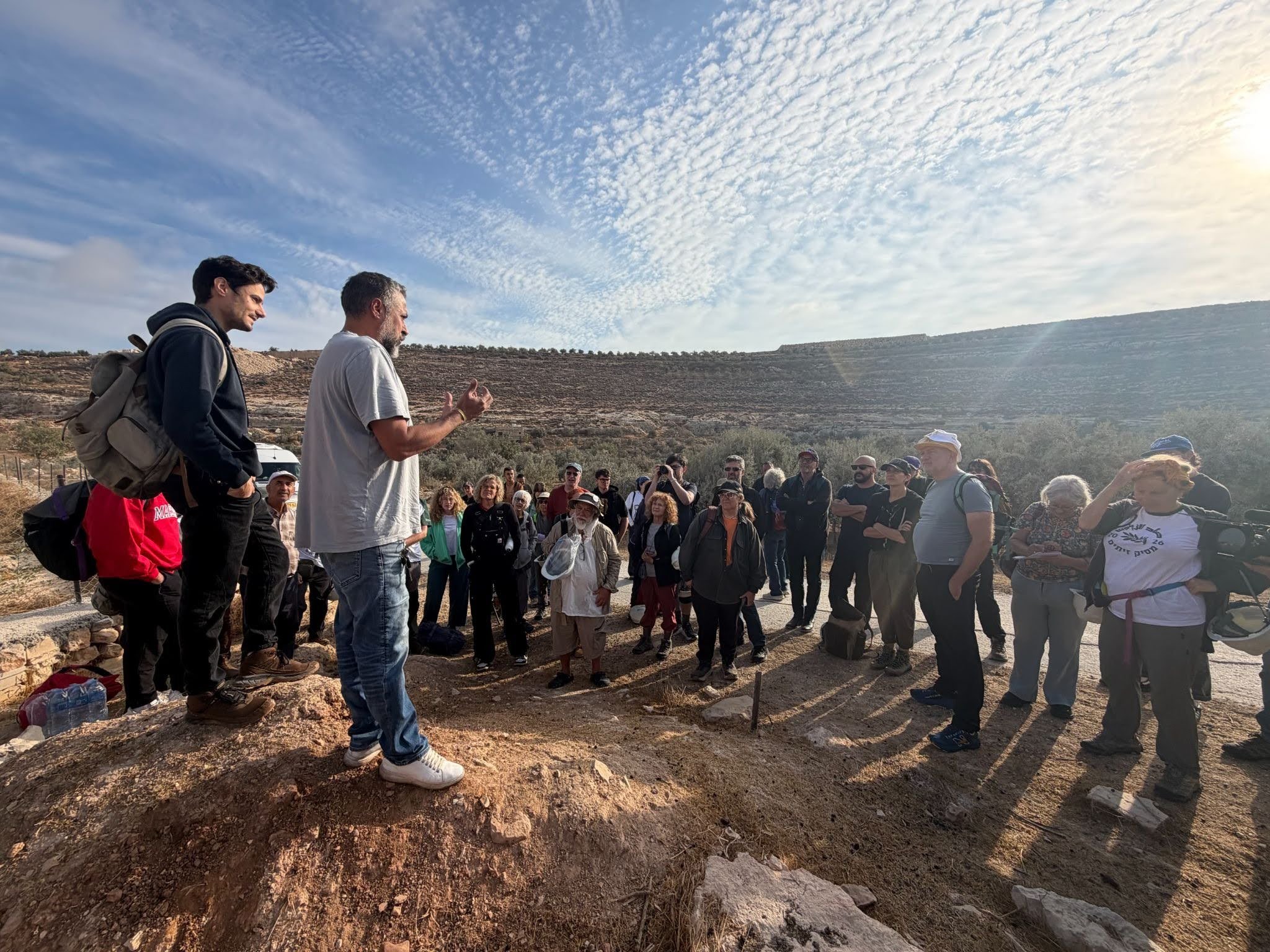
Photo by Aaron Naparstek
Ben Cooley — November 23, 2026
Views and positions expressed here are those of the writer, and do not necessarily represent NJN's views and policy positions.
Last month I spent a week in the West Bank picking olives with Protect the Harvest, the relatively new umbrella organization that brings international volunteers into Palestinian groves during the harvest, when farmers face the most harassment from settlers. Rabbis for Human Rights coordinated our days in the fields and holds the relationships that make it possible: with the olive farmers, the presses, the van drivers, and the Israeli peace activists from Tel Aviv and Jerusalem who have been doing this work for years. I went with a cohort of rabbis and activists organized by T'ruah. These are a few of the scenes I keep returning to.
Who Is This For?
Some of the fields we harvested were clearly safe from settlers and of no interest to the army. On quiet days it felt like a Sunday outing to pick apples or strawberries outside any American city. I started to wonder who this was really for. Was it for me? Was it just performance? Should I have just sent the money I spent on the trip to mutual aid groups that could use it more directly?
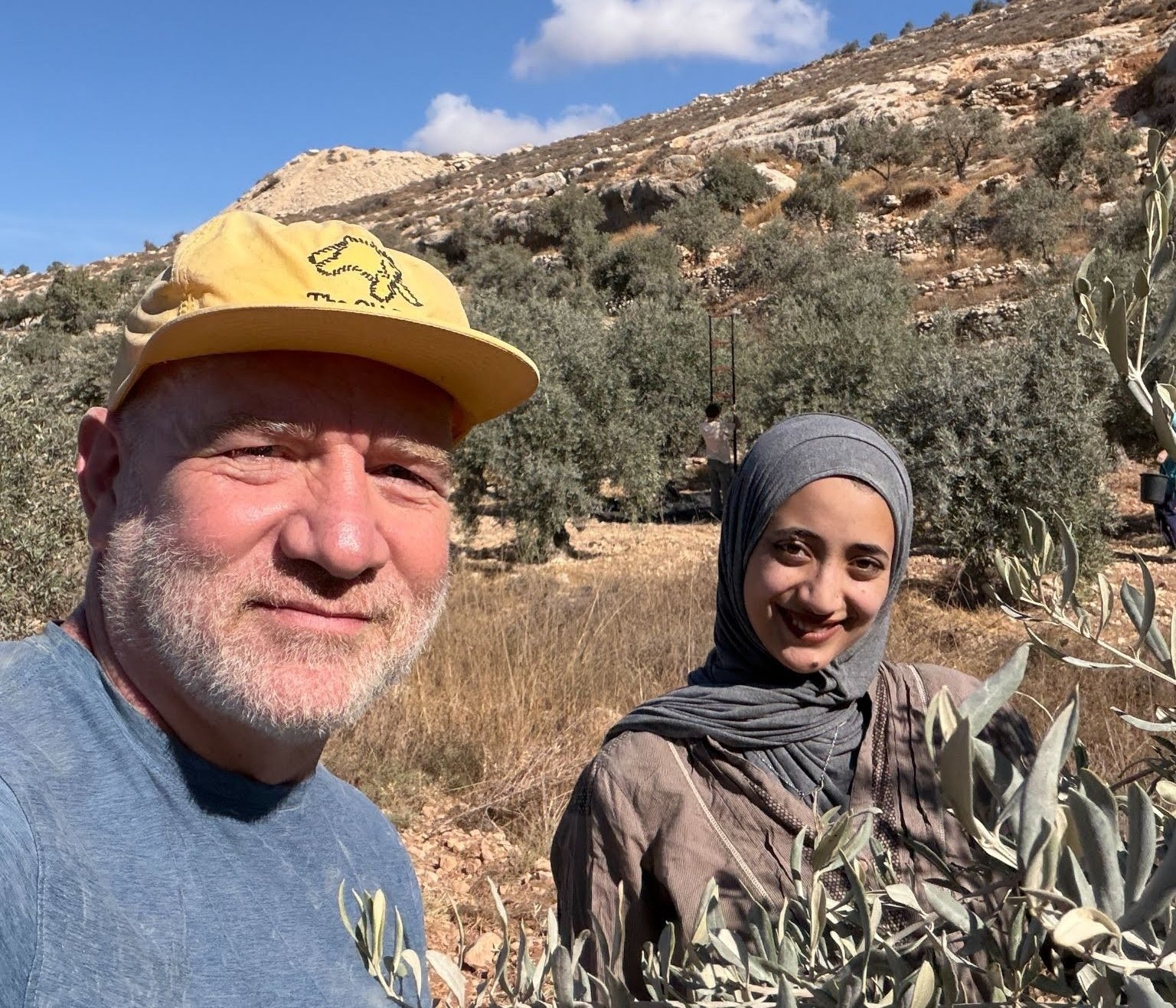
Ben harvesting olives alongside a Palestinian woman, practicing her English with him.
I put the question to Matan Berner-Kadish (@matberkad), an Israeli-American organizer who has given the last few years to this work. His answer, as best I can paraphrase it: The Occupation is violence and a poison. Palestinians are being pushed off a cliff by it. We're here, using our privilege, to buy everyone on both sides a little more time to find a peaceful solution. We bear witness to the violence. We slow it down by putting ourselves between the soldiers and settlers and the people living on the edge of that cliff, and maybe we put a hand on their back to help them push against the pressure.
The Grove
You never know which day will look like suburban apple picking or a settler attack. Ours changed on the third day.
After two days of joyful harvesting in well-kept groves, we brought a larger group to a field that family farmers hadn't been able to work since October 7. The trees sat right up against a newer settlement whose residents, we were told, had made threats and called in the army every time the farmers came to prune or pick. You could tell. Weeds grew tall between the rows, and the unpruned trees gave little fruit.
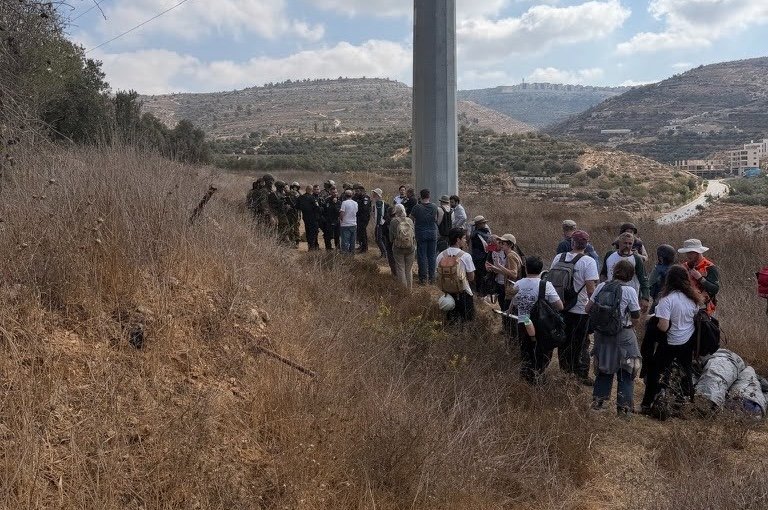
The IDF stops the Protect the Harvest group.
Within an hour a settlement security vehicle pulled up behind the fence to watch us. Soon the army arrived and declared the area a “closed military zone.” It is not illegal for Palestinians, or anyone they invite, to pick olives on their own land. But the pattern is a familiar one. Settlers complain about a farmer's presence in his own ancestral grove, the army closes the area, the farmer goes home, and the trees go another year untended, or worse, stolen. On a good day, the soldiers leave after activists confront them. On others, they make up a reason for the farmers to leave or, on rare occasions, put everyone on buses and make arrests.
The Bus
As you may have read, our group of about 60 people was detained that day by the IDF, divided into international and Israeli activists and put on buses headed for a local police station.
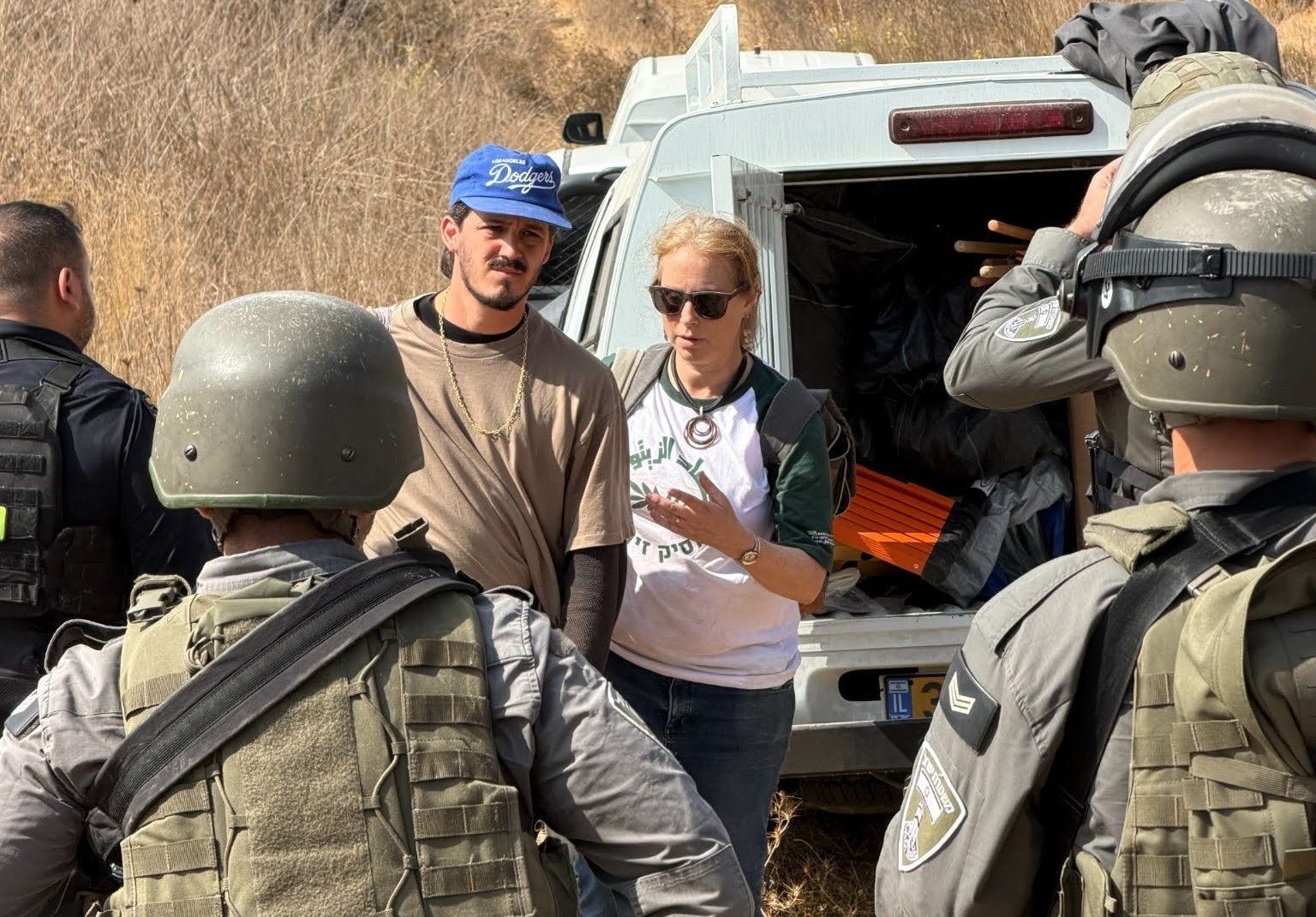
Rabbi Aaron Leven and Rabbi Jill Jacob from T’ruah being detained by the IDF.
Brad Lander, now congressman-elect from Brooklyn, was with us, having picked olives with our cohort every day. As we were rounded up, he was shooting video and narrating exactly what was happening into his phone. He got on the bus last and sat on the floor in the back, next to me by the stairwell. Like the rest of us, he texted his family that he was safe. Then he and the others called in the cavalry. T'ruah, the Protect the Harvest leadership, and Brad's team in Brooklyn, just waking up to the news, all got to work. This is what we trained for. By the time we reached the police station twenty minutes away, Haaretz had the story, and it kept growing all day, in Israel and back home.
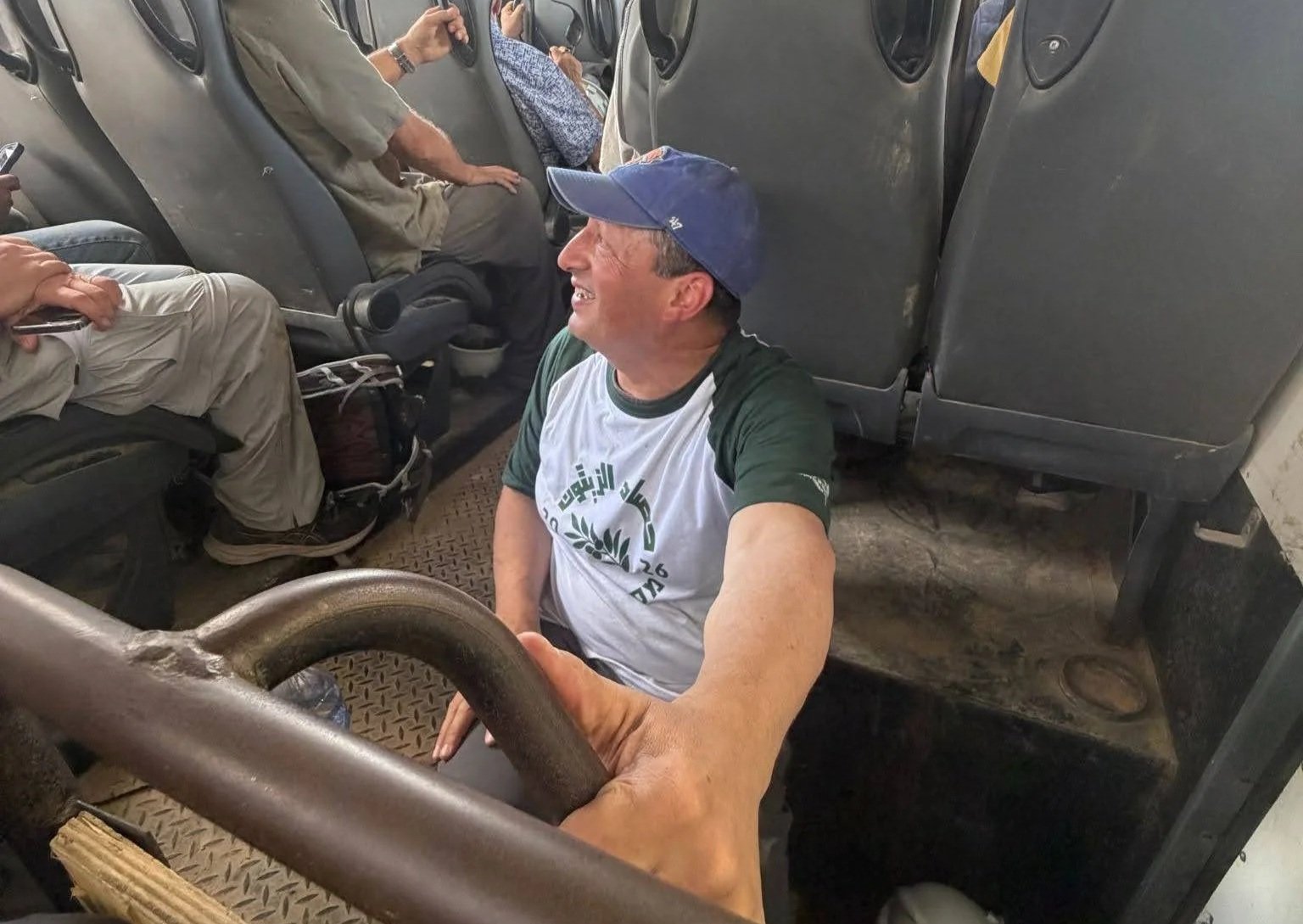
Soon-to-be Senator Brad Lander detained on the IDF bus.
At the station we were fingerprinted and photographed. For a while the Protect the Harvest lawyer told us the state was preparing to interrogate and deport our entire group. Then word came that all but four of us would be released without charges. The last four were let go a few hours later, after intense interrogations. The Israelis in our group were barred from the West Bank for 30 days, a ban a judge later voided after the state brought no charges. A few days after our detention I received notice that my visa was revoked.
Within hours, depending on who you asked, what we'd done was brave, necessary, performative, vote-getting, or self-hating. On that level, the story was about us. And this is the rub for any non-violent protestor. It’s not about you. Brad seemed to understand this. Every time he spoke to the press, he turned the focus to the Palestinians. What happened to us pales in comparison to the daily existence of Palestinians of the West Bank, who face far worse every day for simply living their lives. Perhaps protesting by picking olives is theatrical. But what the world got to see because of that theater was not.
Yones
After our unceremonious release that evening on a street corner in downtown Jerusalem, a friend of mine and I texted Yones, a Palestinian from East Jerusalem we'd gotten to know that week. He picked us up and we told him about the excitement of our day. Our detention was all over Israeli and American news as well as Jewish social media, but he, just a few miles away, hadn't heard anything and wasn't especially impressed, though he was grateful. As we drove through a checkpoint, he said, "This is a great thing that you've done. But now you see how it is for us. And this is only 1% of what we experience every day."
Heart and Head
On the trip I also saw my Israeli friend Tal, who I've known since 1998. She drove me an hour south of Tel Aviv to the October 7 memorials. We passed the burnt homes of Kibbutz Be'eri and spent an hour at the Nova site, walking among hundreds of signs telling the stories of the young people killed there. Driving back, I talked through my anger at the government that failed to stop the attack and then exploited it.
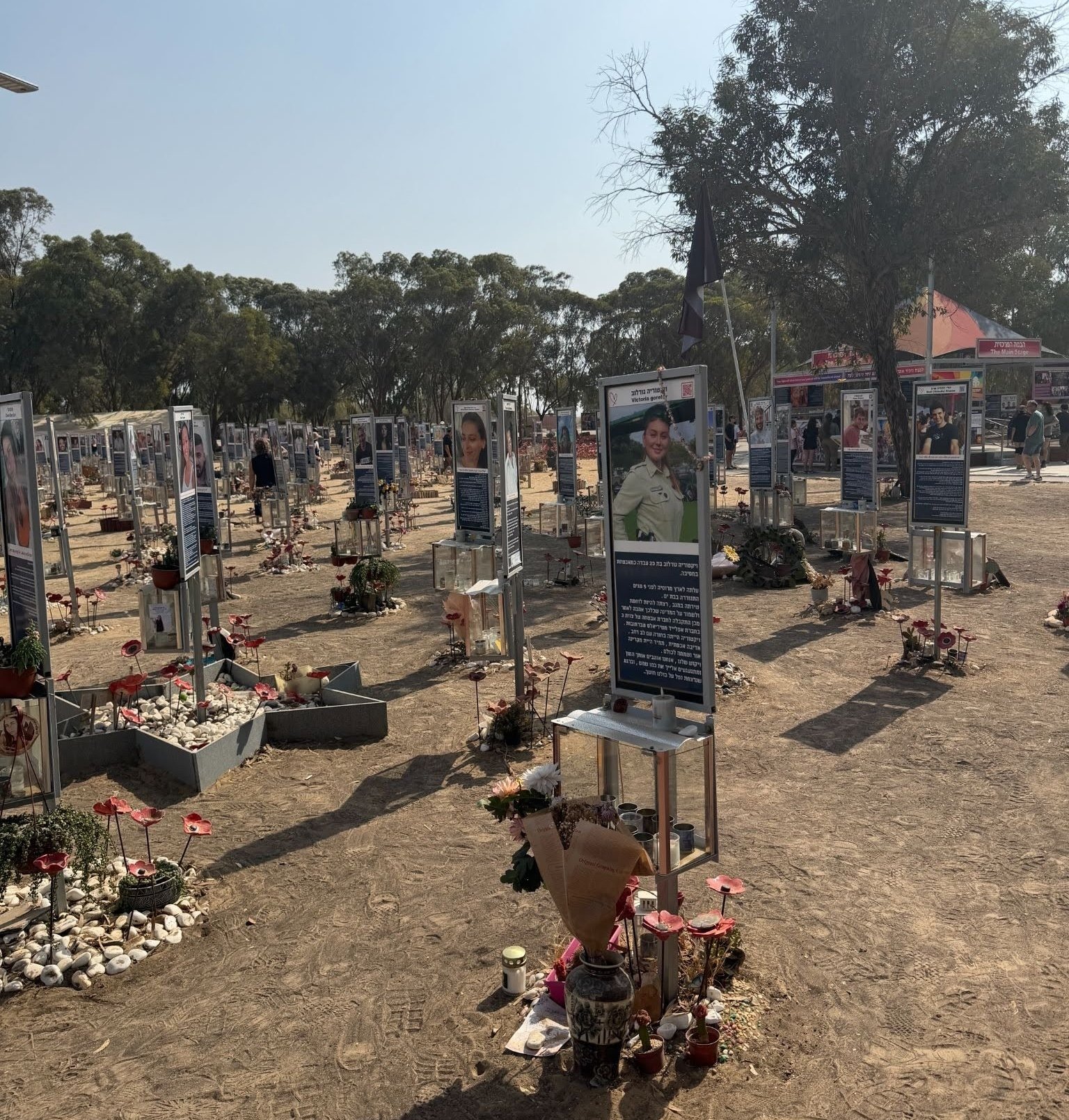
NOVA memorial.
Tal listened. She had served in the IDF, her eldest was entering the army that week, and after the attack she had helped organize aid for families the government left on their own, including one that had lost a father and a daughter. Then she said, kindly, "It seems that with the Palestinians you feel with your heart, but with the Jews here in Israel you think with your head."
It wasn't an accusation. She was helping me see something. The work, I think, is to hold her loss the same way I held the losses of the Palestinians I'd picked olives beside the week before. Not more, not less. The same way.
People Have Rights
I got back from the West Bank on Friday and took the train into Tel Aviv where Tal met me for a beer. She spotted Avinatan Or across the street. He was taken from the Nova festival on October 7 and held in Gaza for 738 days, longer than any other hostage. She marched me over to introduce me to him in that way that all Tel Avivians seem to know each other. I blurted out, "Thank you." He looked amused and asked, "For what?" All I could come up with was, "For staying alive." After a very long second, he let me off the hook, gestured to the friends at his table, and said, "Of course! I had all this to live for. Drinking at a cafe with my friends."
I've thought about that a lot since, alongside something I heard the scholar Shaul Magid say on a podcast: countries don't have rights, people do. The right to pick your family's olives. To dance at a festival. To sleep in your own bed. To have a drink with your friends on a Friday afternoon.
Protect the Harvest is one small, concrete way to defend those rights for people who are losing them. I hope you'll seek out the Israelis and Palestinians fighting for peace for their own people, and if you can, go stand in a grove with them.
Ben Cooley is the Director of Communications and Content at IKAR, a Jewish community in Los Angeles, and serves on the board of directors of Camp Gilboa, the Habonim Dror summer camp in Southern California.
