
Is the Iran war changing the region?
Yossi Alpher — May 4, 2026
Views and positions expressed here are those of the writer, and do not necessarily represent NJN's views and policy positions.
Q. Changing, in the sense of “plus ça change, plus c’est la même chose” (the more it changes, the more it stays the same)?
A. This is certainly true of the Gaza Strip. Fully half a year after the relevant parties signed President Trump’s Twenty Points and launched a peace and rehabilitation process (and Trump took empty credit for ending yet another conflict), almost nothing has happened. The parties convened a couple of weeks ago in Cairo and took note of the depressing reality: Hamas has not been disarmed, there is no ‘technocrat government’ in place, the funding and troops for an international stabilization force are not yet fully committed, sporadic clashes have claimed another 800 or so Palestinian lives, and two million Gazans are now crammed into 47 percent of the Strip.
Nikolay Mladenov, the Bulgarian UN veteran who is responsible for the Strip on behalf of Trump’s Council of Peace, marked the six-month anniversary very pessimistically and critically toward Israel: “Trump’s plan has reached a sensitive historic crossroads. The end of the war has not brought the change the residents of Gaza had hoped for. The ongoing strikes and humanitarian shortages reflect a wide gap between the political understandings that were reached and the reality on the ground. Israel’s control over half the territory, alongside the destruction of infrastructure, constitutes a major obstacle to implementing the plan.”
Behind it all is the Iran-Hezbollah war, which seems to have put a freeze on everything. Both the Netanyahu government and Hamas appear to have signed on to the Twenty Points with little intention of full implementation. Netanyahu’s messianic cabinet allies covet the 53 percent of the Strip east of the Yellow Line that Israel still holds. Hamas, backed by Turkey and Qatar with their Islamist leanings, has no intention of giving up either its weapons or its de facto control over the Gaza population.
And thus far, neither Trump nor Mladenov nor any of the many dignitaries (remember Tony Blair?) who gave their blessing to the twenty-point document are doing anything about it.
Q. In contrast to Gaza, the more frightening the threat from militant Islam in Iran and from Hezbollah, the more it pushes regional actors like the UAE and Lebanon closer to Israel.
A. Indeed, at least one of those actors, the United Arab Emirates, openly and in spectacular fashion. Last week, it became known that not only had Israel deployed an Iron Dome anti-missile battery with its IDF operators to the UAE, with which it has had relations since 2020 under the Abraham Accords. Israel has reportedly followed up by deploying in the UAE even newer, cutting-edge anti-missile and anti-drone units to combat Iranian attacks.
Take note: the specter of the Israeli army defending a distant Arab country against a shared enemy is no mean precedent. The IDF deployment in the UAE goes far beyond, say, the Israel Air Force cooperating with neighboring Egypt and Jordan against shared Islamist enemies near the border.
Emirates ruler MBZ (Mohammed bin Zayed) appears to have no problem acknowledging this cooperation, just as last week he had no problem taking the UAE out of the OPEC+ energy cartel on the grounds that it was constraining UAE production.
The only obvious negative fallout for Israel from this extraordinary military partnership with Abu Dhabi might be from Saudi Arabia, a UAE rival that might now have moved a little farther away from normalization with Israel.
Q. The Saudis also demand progress with the Palestinians as a condition for normalization. The UAE and Lebanon don’t have that luxury?
A. Definitely not. The Iran-Hezbollah threat looms much larger than the Palestinian issue. We are now looking at a possible (also unprecedented) Lebanon-Israel summit in Washington soon, and at increasing discussion of closer Israel-Lebanon security collaboration against Hezbollah, which is now understood to menace Lebanon’s very political fabric.
Today, the Lebanese state is threatened by the country’s largest ethno-religious faction, the Shi’ites (40 percent of the population), backed by a hostile regional power, Iran.
(Countering Hezbollah in coordination with Beirut would not be the first instance of Israeli military cooperation with the Lebanese. Recall the 1982 war, where Israel was briefly allied with the Lebanese Maronites. Recall, too, that that adventure did not end well for either Israel or Lebanon.)
Q. You began by noting that nothing is changing. That certainly is true militarily, on the ground, for months in Gaza and for some weeks now in Lebanon and vis-à-vis Iran. No exceptions?
A. One: the West Bank. There, under Netanyahu and his annexationist ideologue Bezalel Smotrich, settler ‘hill youth’ – backed by the IDF, the Israel Police and the Shin Bet (the latter two now under Kahanist/messianist leadership) – continue to rampage in a bid to bury the two-state solution once and for all.
Q. Is the more-or-less half of Israel not represented by this government alarmed enough by the West Bank situation to make this a major electoral issue six months from now, in Israel’s October Knesset elections?
A. Here, in view of the anti-democratic clouds on Israel’s horizon, we have to answer one question with no fewer than three questions. First, can the political opposition to Netanyahu, which must attract mainstream right-wing votes to prevail, indeed make the West Bank a major electoral issue without losing votes?
Second, to what extent will the Kahanist-messianic right wing disrupt the election itself?
And third, to what extent might Netanyahu, if he loses, refuse – January 6, 2021 Trump-style – to acknowledge defeat?
Q. Bottom line?
A. The Arab world is affected more by fear of Iran than by solidarity with a Palestinian national movement that has been taken hostage by militant Islam. Arab states are not concerned over Palestinian human rights (or any other human rights, including their own). Hence their readiness to deal with a status quo Israel.
Not so the Europeans, who are taking their distance from Israeli militancy and religious extremism. Not so a growing sector of Americans, but not Trump, and not his ambassador to Israel, Mike Huckabee, who aids and abets the messianic settler movement in the West Bank and regarding Gaza.
Trump’s lack of a strategically wise approach toward Iran, Gaza, and Hezbollah appears to be reflected in the current lack of movement on those fronts. All are stalemated. Israeli freedom of maneuver, whether for positive or for negative purposes, is constrained by Trump. Yet since nothing is resolved, violent conflict could be renewed on any or all of these fronts overnight.
Still, the Iran war has changed the region. As Tehran attacks them, the energy-rich Gulf emirates have adopted a far more negative attitude toward an aggressive Iran, even if only the UAE has gone so far as to ally openly with Israel. The latter, in turn, is increasingly viewed in the Middle East in regional rather than Western terms: as a militant power operating in a non-democratic world. As ‘one of the boys.’
Not surprisingly, then, most of the West appears to have changed its perception of Israel in a negative direction: not a democratic outpost, not a bastion of Western values, but another Middle East militant.
Yossi Alpher is an independent security analyst. He is the former director of the Jaffee Center for Strategic Studies at Tel Aviv University, a former senior official with the Mossad, and a former IDF intelligence officer.
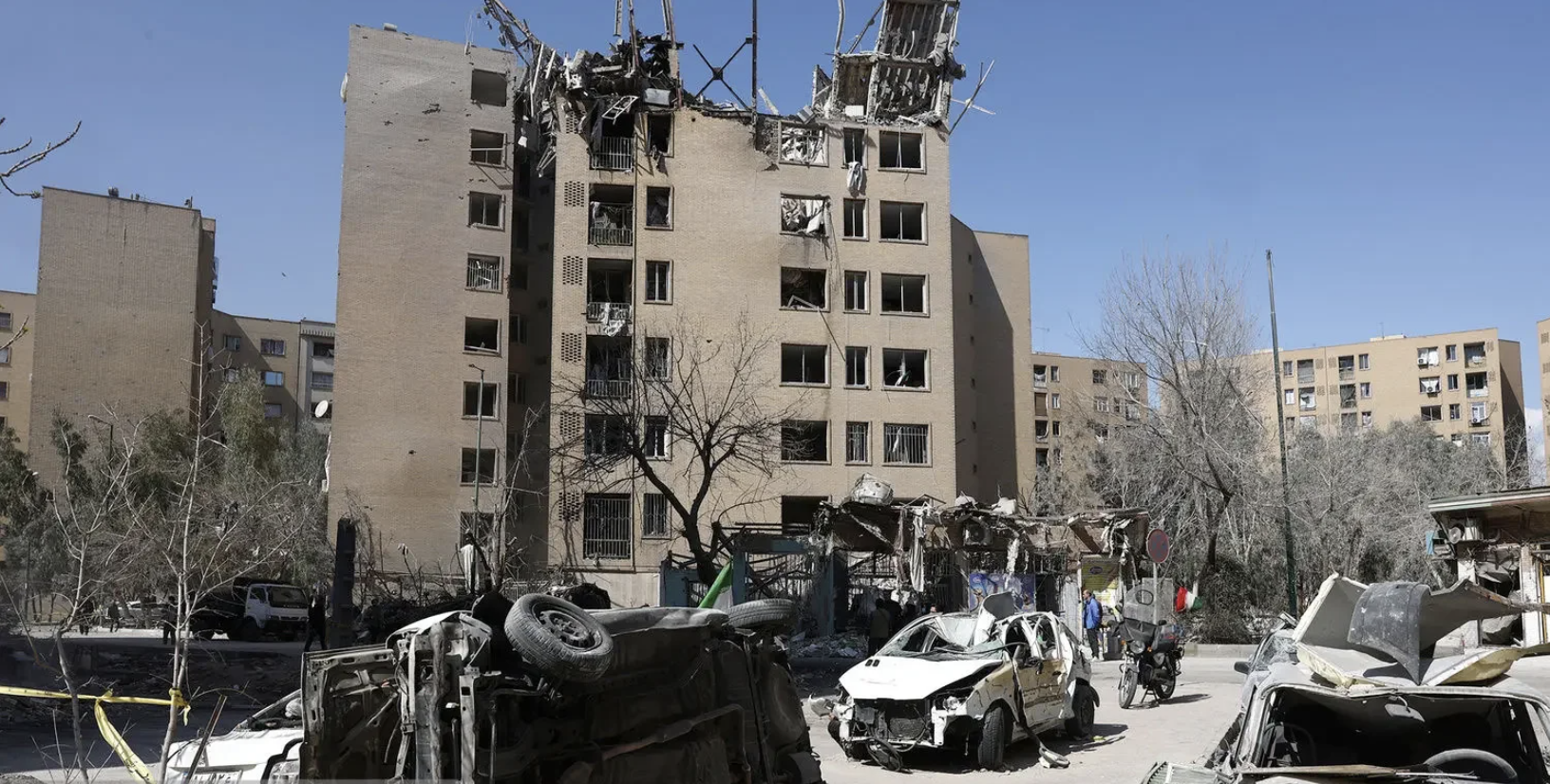
Photo by Avash Media, CC BY 4.0, via Wikimedia Commons
