
New Round of Warfare, New Strategic Issues
Yossi Alpher — March 2, 2026
Views and positions expressed here are those of the writer, and do not necessarily represent NJN's views and policy positions.
Q. Last week, you thought there was a better-then-even likelihood of a US-Iran nuclear deal. Where were you wrong?
A. The perceptual and conceptual gaps between Iran on the one hand and the US and Israel on the other were even wider than I imagined. To illustrate: The fact that a host of Iranian strategic leaders from Supreme Leader Khamenei on down seemingly took no precautions about their Saturday morning meeting--and accordingly, were assassinated in the opening attack--says it all about their overconfident approach.
Did they not understand that their negotiating position with the US had backed them into a corner? Did they not realize that for President Trump, diplomacy and a military buildup were two sides of the same negotiating coin? Did they really believe they could draw out negotiations endlessly? Had they learned no lessons from the June 2025 Twelve-Day War opening salvo attack that decimated their military leadership?
Q. So there is déjà vu here. But there is also a great deal of innovation, some of it seemingly reckless and ill-considered, not only on the part of Iran, but on the US and Israeli side as well…
A. Let’s start with the deliberate assassination of Khamenei. While his hands were drenched in blood from terrorizing his own people, assassinating him--a political and religious leader of a sovereign country--is not exactly an acceptable act among nations. Nor is it a likely means of bringing down Iran’s Islamist regime, as Trump and not a few Israelis seem to assume: the regime is layered with redundancy; it is built around institutions that guarantee an orderly transfer of power and orderly functioning in an emergency. Nor, with all due respect to “Baby Shah” Pahlevi, is there an obvious alternative to Islamist rule in today’s Iran.
What’s more, now Trump and Netanyahu have ensured that assassins from Iran and/or its proxies will continue to lie in wait for them and their successors for the foreseeable future. Israel’s Arab neighbors’ leaders will forever cast a suspicious eye on Jerusalem’s intentions and capabilities: not necessarily a productive formula for peaceful relations. Certainly an Iran-sponsored terror wave in the US and Europe is now more likely.
Killing Khamenei has brought into the fray Lebanese Hezbollah--albeit an Iranian proxy much weakened by years of Israeli attrition and beeper-attacks and a hostile Lebanese government. Can the Yemeni Houthis be far behind?
Let’s move from here to the very decision on the part of Washington and Jerusalem to attack. Was there still hope for the negotiating alternative? Iran certainly encouraged that impression. Alternatively, it was simply playing for time through delaying tactics. Certainly, it was embarrassingly unaware of the real tactics and intentions of the Trump negotiating team, backed by Netanyahu who clearly sought a military solution.
This brings us to the biggest innovation from Israel’s standpoint. This is the first time a genuine US-Israel military coalition has launched and fought a war. Throughout its 78-year history, Israel has sought to be integrated into a western military alliance; until now, the closest it ever came was the 1956 Sinai Campaign. Back then, Israeli, British, and French forces coordinated operations against Egypt in a highly controversial operation that invited combined Soviet-US pressure on Israel.
Will Trump’s decision to act in concert with Netanyahu prove equally problematic in terms of US domestic politics? A solid majority of Americans currently do not support the American strike against Iran: Trump promised fewer wars, not new ones. Nor are Israel and Netanyahu exactly gaining in popularity with the US public after years of bloodletting in Gaza. As for the increasingly hawkish and messianic Israeli public, it is there that Trump just became even more popular.
Q. Can the Islamist regime in Tehran recover from the death of Khamenei and so many key regime figures?
A. Clearly, the coalition-attack planners think not. They are counting on anti-regime Iranian masses and perhaps the would-be-Shah, Reza Pahlevi, to lead the charge against the regime and, somehow, replace it. With whom or with what no one seems to know; Pahlevi’s chances of mounting anything but a TV offensive are minimal.
Any concerted attempt to dislodge the Islamist regime’s surviving leaders could quickly mean chaos in Tehran and ethnic rebellions in the periphery, with neighbors like Turkey, Pakistan, and Afghanistan alternately fearing spillover and looking to turn a profit.
Neither Washington nor Jerusalem has a good record in the regime-change business. Once again US and Israeli leaders and ‘strategists’ are revealing an alarming lack of deep understanding of Iran and the Islamist Republic. This is an extremely risky and dangerous situation. Iranian regime stalwarts will try to mitigate it by mustering their loyalists, sticking to agreed procedures for replacing senior figures, including Khamenei, and either conciliating or slaughtering rebellious citizens.
Q. Iran is attacking not just Israel and US bases, but a host of Gulf Arab countries, from Kuwait to Bahrain. It has also fired missiles at Jordan and even Cyprus. Even strictly neutral ‘facilitator’ Oman has not been spared. This hardly seems the response of a hapless victim of US and Israeli aggression, as Iran portrays itself…
A. One explanation for Iran’s aggressive behavior toward neighbors who did not attack it is that it hopes they will be desperate enough to pressure the US (whose bases Tehran claims are its real targets) to cease the war. Another explanation is that the Iranians have simply lost all geostrategic proportion in their response to the US-Israeli attack, much as they failed abysmally to calibrate the US response to their delaying tactics in the abortive nuclear negotiations that preceded the attack.
One way or another, the otherworldly-dream status--in the eyes of outsiders, including Israelis--of emirates like Dubai has been tarnished. The gleaming towers, the corniche, the yachts--are all suddenly missile targets.
As for Cyprus, an EU member state, here we have an aggressive Iran potentially opening up a new front with the European Union! Now the UK, which has an RAF base at Akrotiri on the island, is also getting involved.
So many gratuitous new enemies. What are the Iranians thinking?
Q. How, ultimately, will the outcome affect US-Israel relations?
A. Nachum Barnea wrote in Sunday’s Yediot Aharonot:
“Netanyahu says the current operation brought the US-Israel alliance to an unprecedented pinnacle. That is true and not true: true regarding military coordination; untrue because the alliance is not between Israel and America but between Israel and the current US president. Israel comes across as a country that pushed America into the wrong war and even takes pride in doing so. That’s the characterization that anti-Semites on the American left and right are looking for. Israel gets Trump on steroids, yet by-the-by loses America.”
Recall that barely eight months ago Netanyahu and Trump proclaimed they had eliminated the ‘existential threats’ emanating from Iran. And by the way, it is a virtual certainty that Trump will ultimately agree to end this war with a nuclear deal that leaves out Iran’s missiles and proxies like Hezbollah and the Houthis, thereby falling far short of Netanyahu’s and Israel’s true strategic requirements.
Q. Bottom line?
A. This is the Israel Air Force’s biggest offensive ever. The partnership with the US Air Force satisfies a long-held Israeli aspiration to be appreciated and sought after by America. Clearly the IAF is equal, from an operational standpoint, to the task.
Will this joint effort succeed in generating a more benign Iran, Islamist or otherwise? Will the Arab world view the US-Israel offensive positively, or with suspicion and even anger? How will Israeli damages and growing casualties affect Israeli attitudes toward the offensive, particularly if Iranian tactics succeed in dragging the war out?
The first day of Iran’s missile counter-offensive against Israel was so intense that Israelis felt a week’s-worth of war fatigue. Since Saturday, a slower yet still deadly pace has emerged. (Certainly it has been difficult to write this Q & A, with an interruption every half hour for a missile alert sending me to a shelter…)
How long will this go on? Trump just said, “four or five weeks.” True, we can’t ever take him seriously. Yet his recent vague ten-day time limit on negotiations proved to be precise. Some Israeli estimates focus on a two-week duration to eliminate Iran’s war-fighting capabilities. As for post-war Iran, it could opt to negotiate with the US and quickly capitulate, or it could draw out talks with the US endlessly while it once again rebuilds its strategic infrastructure.
But when and how will the current fighting actually end? Do Trump and Netanyahu even have an exit plan? And how will the outcome affect election outcomes in both the US (midterms) and Israel (Knesset, probably in September). An unkind but not entirely ungrounded assessment of the rationale for this entire anti-Iran offensive could easily be confused with Israeli and American electoral politics.
Finally, bear in mind that this is a preliminary assessment, based on a rapidly changing dynamic.
Yossi Alpher is an independent security analyst. He is the former director of the Jaffee Center for Strategic Studies at Tel Aviv University, a former senior official with the Mossad, and a former IDF intelligence officer.
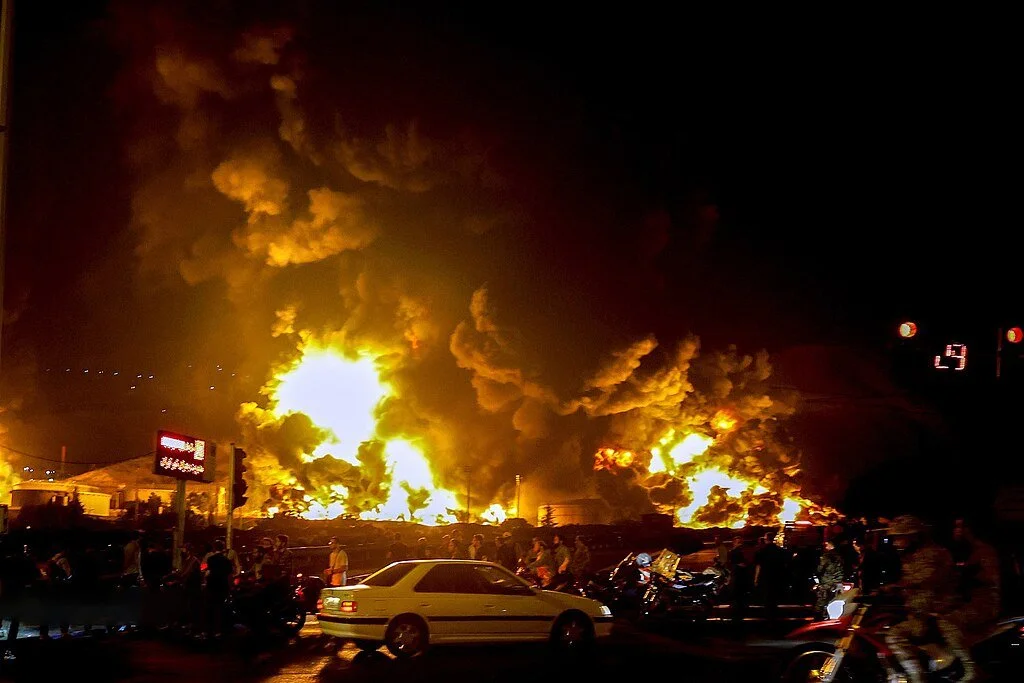
Photo by Avash Media, CC BY 4.0, via Wikimedia Commons
