
Systemic Security Failures Ahead of Israel’s Election
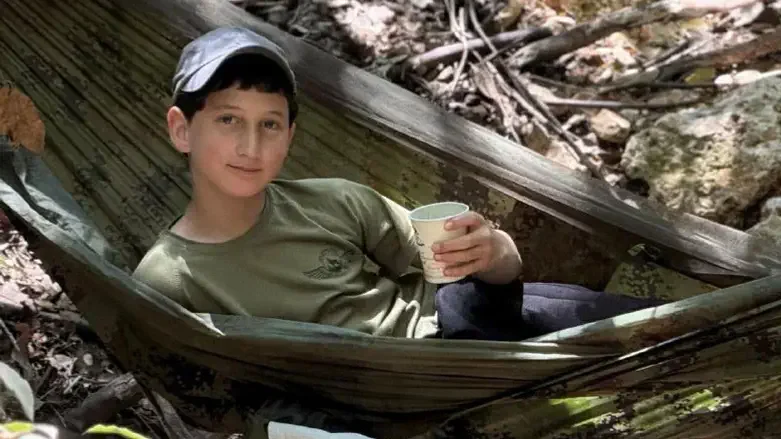
Elazar Yair Wilensky, Z”l. Photo courtesy of his family.
Dina Kraft — October 13, 2026
Views and positions expressed here are those of the writer, and do not necessarily represent NJN's views and policy positions.
On Monday, a 14-year-old Israeli boy, described by his friends as bright and curious, scurried off the forest-lined trail of his school hike near Israel’s northern border with Lebanon when something shiny and black caught his eye.
Elazar Yair Wilensky retrieved a piece of a Hezbollah missile and showed it to his friends.
“He got very excited about his discovery, and he started to explain to his friends what it was, and what it was used for. He spoke with confidence and passion, like someone who really knows about the subject,” a friend told reporters.
Minutes later, many of those same ninth-grade friends were scattered on the ground nearby, bleeding and injured. Elazar was mortally wounded.
The focus in media reports afterwards was more on the quick-thinking of the kids, who made tourniquets with belts and socks for their friends until paramedics arrived, than on the systemic failure that plunged them into this nightmare scenario in the first place.
Israelis have long cited security as their top priority. Prime Minister Benjamin Netanyahu’s government describes itself, even after its failures ahead of the October 7, 2023 Hamas-led attack, as Israelis’ only option to keep them safe. But two weeks ahead of what has been classified across the political spectrum as the most consequential Israeli election ever, there seems to be little discussion of the pattern of systemic negligence that has made everyday life for Israelis increasingly unsafe.
Monday’s explosion on the school trip is the most recent example – an excursion approved by the Ministry of Education and the school itself. The approvals came despite explicit warnings posted by the KKL-Jewish National Fund, the organization that oversees the Naftali Forest, declaring, “Danger, No entry!” to the forested areas “due to restoration of war damage.”
It is widely known that the border area has still not been fully cleared of the Grad rockets launched by Hezbollah. The rockets, known as cluster bombs, contained submunitions that spread across wide swaths of land and often do not explode on impact.
The news of Elazar’s awful death drew my mind back to late February. The Education Ministry at that time permitted all school and youth movement hikes, despite the imminent threat of a reignited war on Iran by the United States and Israel.
At the time, my then 18-year-old daughter was on a national gap year service program, with a hike scheduled through the hills overlooking the Sea of Galilee. The parents’ WhatsApp channel was alight with fear and concern: “Really? The trip has not been cancelled or rescheduled?"
The youth movement organizers’ replies consistently relayed the same message: they were in touch with the Education Ministry, the safety guidelines were unchanged, and the trip was proceeding as scheduled. On the day of the hike, we grudgingly let our daughter go, only to recall her the next day when U.S. Ambassador Mike Huckabee wrote a post on X that all U.S. embassy non-essential staff were advised to leave in the next 24 hours.
A few hours after my daughter and a friend made it back to the Tel Aviv area, running down the side of the road to catch the final public buses still running that Friday afternoon before Shabbat set in, the U.S. and Israel began their joint attack on Iran. Still on their Galilee hike amid missile sirens sounding were about 40 other teens who huddled together in an outdoor shelter until buses could pick them up and bring them home.
Reeling with the news of the school hike, I also thought back to a more recent event of just two weeks ago, the thwarted suicide crash/hijack attempt of the FlyDubai flight to Tel Aviv. Here again there were reportedly warnings unheeded by the transportation ministry for years, according to National Security Council documents. The ministry had not been doing its critical due diligence of security checks on foreign airline staff flying to Israel.
And we all know how that ended: with Hamam al-Hammami, the Omani co-pilot stabbing the pilot, with a plan Emirati authorities say was to crash the plane into Ben-Gurion airport in Tel Aviv. The plan was only thwarted by the brave and fast-thinking actions of Israeli passengers and another team of pilots who were passengers on the plane who were then able to safely land it.
Al-Hammami had made no secret of his hatred for Israel; he broadcast it on social media, and his behavior was of concern enough that he was reportedly barred from flying on the Omani national airline.
Again, the warnings were there for those who bothered to do their jobs and check.
Meanwhile, Arab citizens of Israel say they have been living with zero sense of personal safety for years now, as an epidemic of violent crime continues to claim victims. In the 24 hours between this Sunday and Monday, two Arab citizens were killed and two others wounded in locations spanning from the north to the south of the country.
The students from the northern town of Maalot who were on the school trip say they were not warned to be cautious of any dangerous objects they might find along their hike.
Just after the piece of the cluster bomb exploded, changing their lives forever, and claiming that of their friend, another was found in the same patch of woods.
As the country votes to decide its future, that piece of metal and explosives is yet another reminder of the dangers posed from without, and some Israelis would say from within. That sense is real regardless of whether one is on the left, center, or right of the highly polarized map of the Israeli electorate.
Dina Kraft is a journalist, podcaster and the co-author of the New York Times bestseller, My Friend Anne Frank, together with Hannah Pick-Goslar. She is a creator of the podcast Groundwork, about activists working in Israel and Palestine, and was formerly the opinion editor of Haaretz English.
