
The US & Israel in Iran: Credibility
Yossi Alpher — March 16, 2026
Views and positions expressed here are those of the writer, and do not necessarily represent NJN's views and policy positions.
Q. Is it bad intelligence or bad leadership that causes Trump and Netanyahu to promise everything from regime change in Iran to a ‘New Middle East?’
A. If I thought Trump and Netanyahu were good leaders, I might agree that they were led astray by bad intel. But because the leadership is so inept and because there is no easy way for the public to verify the accuracy of clandestine intelligence projections, we have to assume that both intelligence and leadership are wanting.
Q. For example, where?
A. Let’s take the capacity and motivation of the Iranian public to topple the regime. The public took to the streets a few months ago because of catastrophic economic conditions in Iran. How did that protest inspire US and Israeli politicians, journalists, and academics (not all!) to predict that the Islamic Republic would now go the way of the Shah’s regime 47 years ago?
The Iranian protester-public had no leaders, no ideology, and no means of command and communication. It was opposed by the regime’s armed, trained, and loyal forces. From abroad, the late Shah’s exiled son and the president of the United States (“help is on the way”) egged the protest on. It failed. Nothing happened. Thousands paid with their lives. Was the intelligence so bad? Were the US and Israeli leaders so ignorant? Or were those leaders simply smugly engaging in ‘spin’ designed to nourish their political agendas?
Here is Netanyahu’s most recent national security adviser, Tzahi HaNegbi, just this Sunday, predicting that, “This has never before in history been attempted, but when the Iranian masses get the signal to leave their homes in order to remove the regime, the American and Israeli air forces can give them real-time close support in intelligence and attack from the air.” Really? How is that going to work? The first drone coup d’etat? Never before in history?
Meanwhile, the blatant lies foisted on the American and Israeli publics after last June’s triumphant Twelve-Day War became clear when the same leaders, Netanyahu and Trump, now revealed that--surprise!!--Iran’s nuclear program had in fact not been decimated and its missile reserves had not been destroyed back then. Who knew the truth back in June? Who knew the truth two weeks ago when suddenly Iran, which until recently was assessed to need about a year to produce a deliverable nuclear weapon, now supposedly needed only a month and had to be stopped on an emergency basis?
Q. And predictions that victory will generate a “New Middle East?”
A. The last leader to predict a “New Middle East” was Israel’s Shimon Peres, who saw the Oslo Accords as the precursor. We saw where that got us. Do the new “New Middle East” preachers really not understand the region and its dynamics--meaning is this yet another intelligence failure--or is this once again mere cynical and irresponsible leadership spin designed to take credit for what is a military but not a political achievement?
Q. Did Trump not understand that war against Iran would send oil prices skyrocketing, with negative ramifications for the US economy on his watch?
A. Iran, under attack, has adopted a strategy of sabotaging the Persian Gulf energy economy by blocking the Hormuz Strait and attacking the Gulf’s oil-exporting countries. This, in effect, is radically expanding the conflict, with Trump contributing by demanding NATO reinforcements at Hormuz.
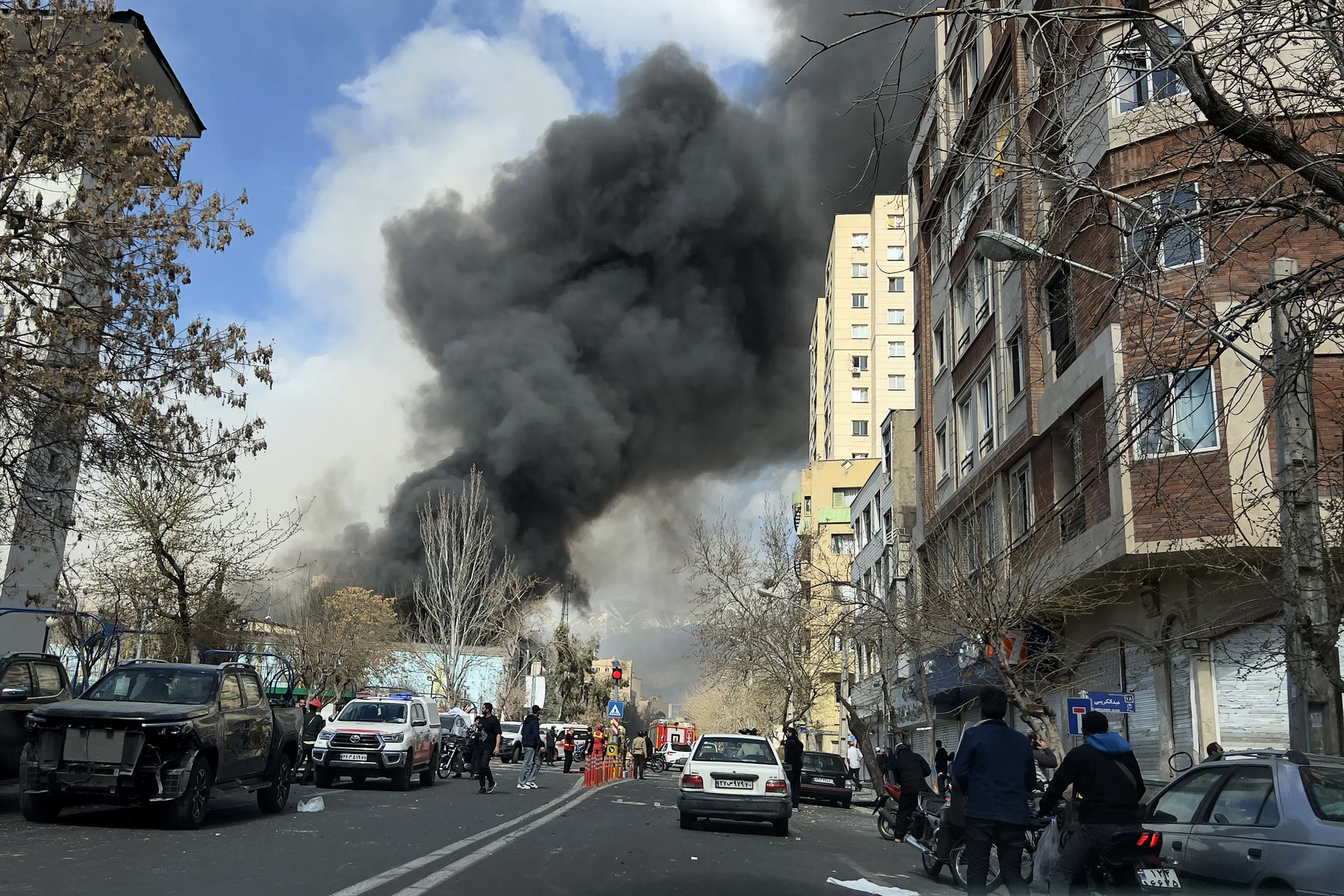
Did US and Israeli intelligence forewarn that Iran would move in this direction? That the Gulf emirates and other countries were fragile and could be taken hostage economically by Iran? The confusion was readily evident when the Israel Air Force bombed fuel reserves in Tehran (all that black smoke!), and Washington intervened to admonish Israel that oil was suddenly too valuable a commodity to sacrifice to war.
Reminder: this war was supposed to be about the nuclear and missile threat. Now it is about oil. The intelligence gap that this implies is far wider than just the price of oil. Here is strategic commentator Michael Milstein in Sunday’s Yediot Aharonot: On the eve of this war, the Israeli public was offered, “an exaggerated picture according to which Hezbollah had nearly ‘evaporated,’ the Iranian threat had been removed, Hamas was heading that way, and the Arab world was gearing up to form strategic alliances with Israel.” All wrong. All mistaken.
Q. Still, at the military level, the war is successful. Does Trump have a viable strategy for ending it? Does Netanyahu? Are they aware of the acute danger of sinking into a Persian Gulf and Middle East quagmire despite their armies’ achievements?
A. The simple answer is that neither leader appears to have a viable strategy and that this points to a basic problem with national-security decision-making in both Washington and Jerusalem. Witness the hopelessly zigzagging leadership assessments of the planned duration of this war: Four weeks? Six? After Passover? Any day now, depending on Trump’s mood?
Strikingly, the air force and tactical intelligence establishments of both countries are performing brilliantly. But without a viable civilian strategic context, and with the leaders surrounded by yes-men--the only officials willing to stay in office--this war has no anchor.
Strikingly, too, while the Israeli military effort, thanks to its existential context of Iranian and Hezbollah demands to destroy Israel, enjoys broad Israeli public support, the US effort does not. One key strategic consequence for Israel is the continuing decline in American support. That decline began with the widespread Palestinian civilian suffering inflicted by the Gaza war (note: another Israeli war without a viable strategy), but it is getting worse as I write.
President Trump, ever shallow and unpredictable, can overnight make it far worse by arbitrarily ending the American role in this war, thereby leaving Israel high and dry in Lebanon against Hezbollah. Is Netanyahu or anyone in his entourage seriously dealing with this cataclysmic threat to Israel’s strategic well-being: the threat of losing American support?
Q. Apropos, there appears to be an inclination in some American circles to blame Netanyahu for somehow dragging a clueless Trump into this war. Is this credible?
A. First of all, if Trump is that clueless, then American voters are to blame, not Israel. Secondly, it is a little too easy to blame the smooth-talking Netanyahu for inflicting his mistaken strategies on American presidents. This began some two decades ago when Netanyahu was blamed for dragging President Bush 43 into invading Iraq, even though a host of high-level Israelis led by Ariel Sharon (and, modestly, including this writer) at the time advised Bush against that folly.
The simple truth is that Netanyahu would never have attacked Iran at this juncture without an American partner, and Trump was willing. Both have their domestic electoral considerations. Both are strategic ignoramuses who are lucky to command superb professional armies, and particularly air forces.
Q. Still with reference to the mistakes attributable to bad intelligence and/or bad leadership: Why were the residents of Israel’s northern border area, having been evacuated after the October 7, 2023 debacle, encouraged more than a year ago to return to their homes based on the understanding that Hezbollah had been defeated? Hezbollah is not behaving like a defeated terrorist army; its rockets are reaching Tel Aviv!
A. Remember the exploding beepers? The elimination of most of the Hezbollah leadership? The commitment by the government of Lebanon to enforce a ceasefire and disarm Hezbollah? As with the Iranian case after the Twelve-Day War, it turns out that Israeli intelligence badly overestimated the damage done to Hezbollah and, consequently, the capacity of the weak Lebanese government to subdue the wounded terrorist movement in the interest of a quiet border.
Accordingly, once war was renewed with Iran two weeks ago, Hezbollah joined in. Now that same hapless Lebanese government, besieged by over a million internal refugees which it is powerless to return home, wants to negotiate with Israel.
Q. About what? Lebanon’s army seemingly has a large enough Shi’ite component that it will not directly confront Hezbollah. Accordingly, the Lebanese government again seems powerless to disarm Hezbollah and enforce its sovereignty in Lebanon’s south.
A. Nevertheless, Israel should take up the Lebanese offer. Direct country-to-country negotiations with Lebanon are almost without precedent. The US and France have offered to help. Washington already enabled the two countries to reach a maritime gas border-delineation agreement that has held. Conceivably, and setting aside short-term military accomplishments against Iran, progress toward Lebanon-Israel normalization could be the only solid achievement to come out of this war.
Q. Bottom line?
A. One last thought: where is Iraq? Why has Iran’s neighbor with its Shi’ite majority and its pro-Iran militias and anti-Iran Kurds not, or not yet, been dragged into this war? Smart leadership?
Yossi Alpher is an independent security analyst. He is the former director of the Jaffee Center for Strategic Studies at Tel Aviv University, a former senior official with the Mossad, and a former IDF intelligence officer.
Photo by Avash Media, CC BY 4.0, via Wikimedia Commons
